At a glance
- Jerking can also occur during a faint.
- Confusion often persists after an epileptic seizure; orientation usually returns faster after a faint.
- Unexplained loss of consciousness also requires assessment for a cardiac cause.
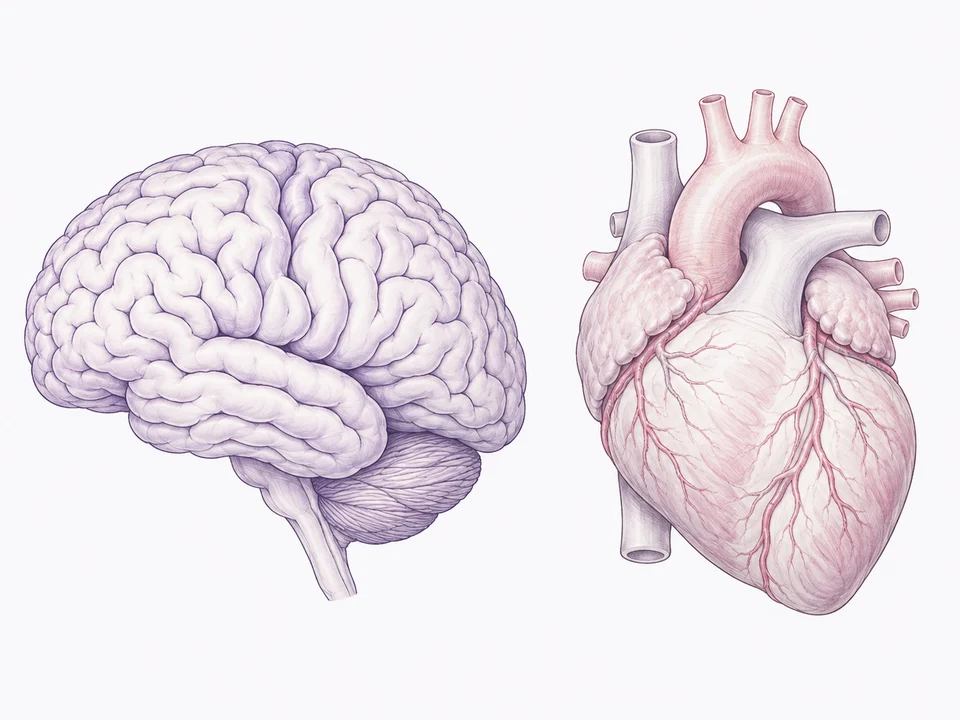
Convulsions do not automatically mean epilepsy
Brief jerking movements can occur during fainting. Their presence alone does not establish epilepsy. Fainting may have a benign mechanism, such as a vasovagal episode, but can also relate to an abnormal heart rhythm or heart disease.
Features suggesting an epileptic seizure
- Head turning or unusual body posturing.
- More prolonged jerking.
- Tongue biting.
- No memory of what happened during the episode.
- Confusion after regaining consciousness, lasting several minutes or longer, with headache, fatigue or sleepiness.
After a typical faint, consciousness and orientation usually return more quickly.
When to consider the heart in particular
Concerning features include loss of consciousness:
- During exercise.
- Without warning symptoms.
- With palpitations or breathlessness.
- In someone with heart disease or an abnormal ECG.
- With a family history of sudden cardiac death at a young age.
Assessment starts with the history, physical examination and ECG. Further cardiac investigations, such as prolonged ECG monitoring, may be needed.
A neurologist or a cardiologist?
Sometimes both. The neurologist assesses whether the episode was epileptic; the cardiologist assesses whether it could have a cardiac cause. Investigations should not stop at “there were convulsions, so it must be epilepsy”.
Preparing for your appointment
- Write down what happened before, during and after the loss of consciousness.
- Bring a witness or their written account if possible.
- Bring ECG results and emergency department or hospital records, if available.
Michalina Malec-Litwinowicz, MD, PhD
Contact and consultations →