At a glance
- EEG is painless and non-invasive. The equipment records signals from the brain; it does not send electrical current into it.
- A normal EEG does not rule out epilepsy. The result must be interpreted alongside the symptoms.
- A doctor should choose the type of EEG based on the symptoms and the diagnostic question.
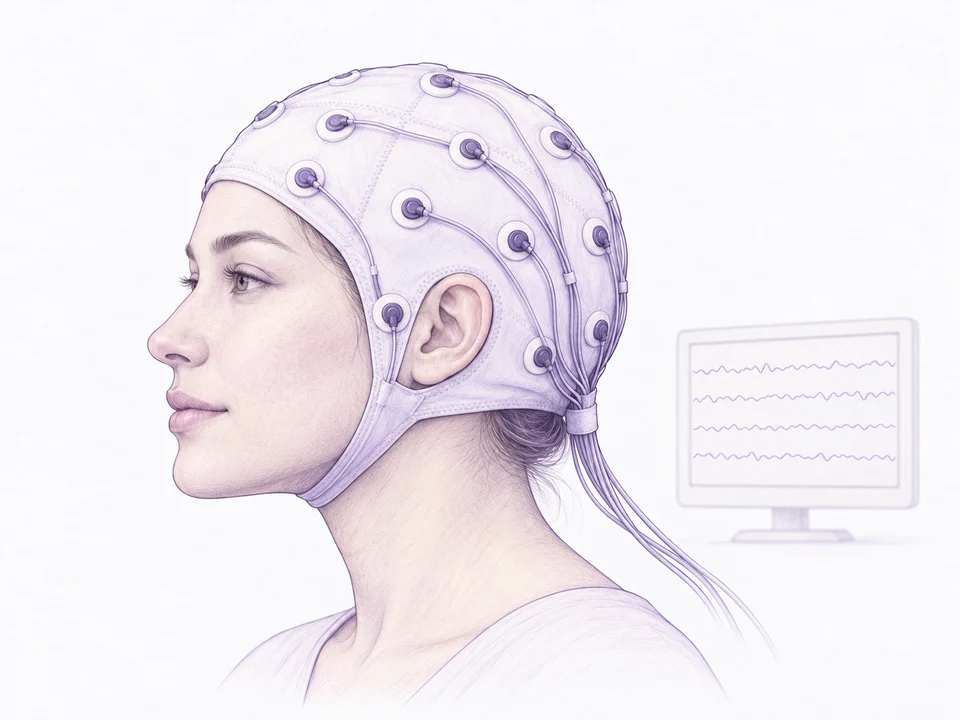
EEG: recording brain electrical activity
Electrodes on the scalp record the brain’s electrical activity. EEG is particularly useful when investigating suspected epilepsy, loss of consciousness, brief lapses of awareness, convulsions and other recurrent unexplained episodes.
You rest with your eyes open or closed. The recording itself lasts at least 20 minutes. Where appropriate, activation procedures include deeper, faster breathing for around 3 minutes and flashing lights. Tingling around the mouth or in the fingers may occur during the breathing procedure. These procedures can reveal changes not seen at rest and can rarely provoke a seizure, so you are observed throughout. You may decline them.
What does the result mean?
Epileptiform changes may appear only intermittently. A first standard EEG detects them in roughly one third to one half of adults with epilepsy; repeated tests, particularly including sleep, increase detection. A normal result therefore does not rule out epilepsy. Some abnormalities also occur in healthy people. Diagnosis depends on the whole clinical picture, not the recording alone.
Video-EEG: seeing the episode
Video-EEG records brain electrical activity and a video of the patient at the same time. It shows what the EEG is doing during an unusual event.
It can help investigate unexplained loss of consciousness, lapses of awareness, convulsions, unusual movements and events during sleep, and distinguish epileptic seizures from functional seizures, fainting or sleep disorders. It may also reveal seizures that a person has not noticed.
A short video-EEG usually lasts 40–60 minutes at the EEG laboratory.
Prolonged video-EEG aims to capture a typical episode and may continue for several days. It can take place in hospital or, in selected cases, at home with a portable recorder and a camera that also records at night. Home monitoring requires a relative who can recognise events and press the event button.
Prolonged video-EEG is important in drug-resistant epilepsy and presurgical assessment. If supervised reduction of medication is needed, the investigation must take place in hospital. Never reduce medicines yourself.
If a seizure occurs during the test
- Press the event button when you feel a seizure starting, or ask the person beside you to do so.
- Staff may speak to you, ask you to raise your arms or remember words. Your responses help identify which brain regions are involved.
Sleep-deprived EEG
Sleep may reveal changes not seen during a short awake EEG. Partial sleep deprivation may be recommended, particularly when a routine EEG is normal but epilepsy remains suspected. Sleeping less can make it easier to sleep during the test and can also increase abnormalities during wakefulness.
The adult preparation schedule described by international epilepsy experts is:
- Go to bed at midnight.
- Get up at 4 am and remain awake until the test.
- Do not drink coffee, strong tea or energy drinks on the day.
- Take medicines at the usual times.
Important safety information
- Lack of sleep can make seizures more likely.
- Do not drive after a sleep-deprived night. Preferably attend with someone.
- Tell the booking team if sleep deprivation tends to trigger your seizures.
Ambulatory EEG: a longer recording at home
When events are infrequent, nocturnal or mainly happen at home, prolonged ambulatory EEG, sometimes called Holter EEG, may help.
You wear a small portable recorder at home, usually for 24–72 hours, covering daily activity and sleep. If video is also needed, home video-EEG may be used instead.
During the test:
- Do not wash your hair, scratch or reposition electrodes during recording.
- Wear clothing that opens at the front.
- Record meal times, sleep, medicines and symptoms in a diary.
- Press the event button for every symptom; a relative may do this too.
Which test is appropriate?
Not everyone needs prolonged video-EEG. Routine EEG, sleep-deprived EEG, a sleep recording or video-EEG may be selected according to your symptoms and the diagnostic question. If the referral does not specify the test, discuss this with the referring doctor or EEG laboratory.
Recording times do not include fitting and removing electrodes.
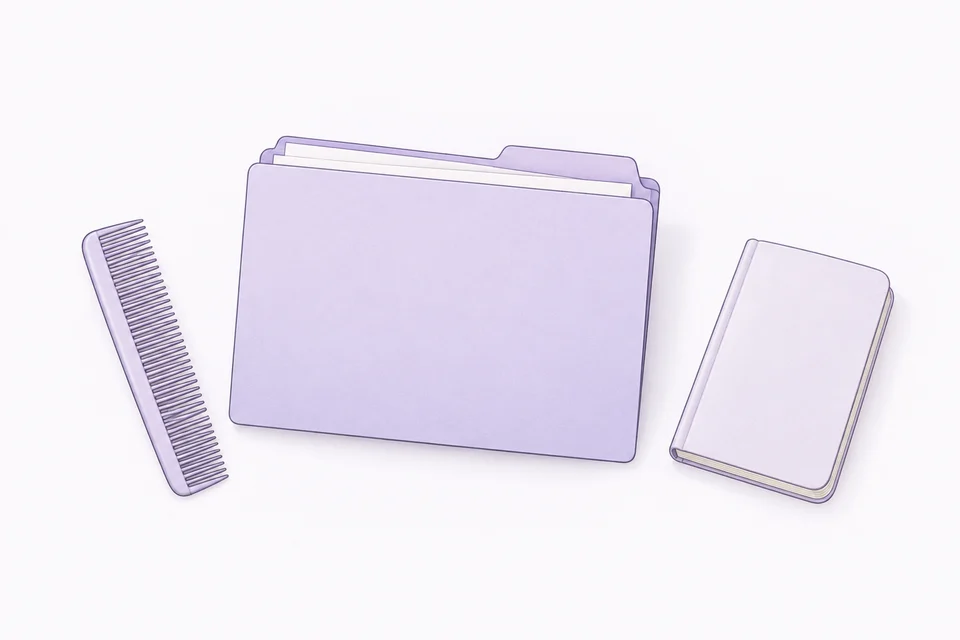
Preparing for any EEG
Before the test
- Wash your hair the day before or on the day. Do not use conditioner, oils, gel or hairspray. Undo braids and remove hair extensions.
- Eat a normal meal. Fasting can affect the recording.
- Take medicines as usual unless your doctor advises otherwise. Do not stop antiseizure medication yourself.
- If episodes recur, bring a phone recording if available.
What to bring
- A referral, if available.
- Previous EEG reports and recordings, ideally on disc.
- An up-to-date medicine list.
- Identification.
Keep a seizure diary
- Record each seizure or concerning event with the date and, if possible, the time.
- Describe what happened, its duration and possible triggers such as lack of sleep, a missed dose or infection.
- A phone app such as Helpilepsy, a calendar or a notebook can be used.
- Bring the diary to every test and appointment.
Tell staff before the test about:
- Pregnancy.
- A stroke or heart attack in the past 3 months.
- Serious heart or lung disease.
- Seizures triggered by flashing lights.
- Some activation procedures may be omitted or modified in these circumstances.
EEG is offered at the practice from age 16. For patients under 18, both the patient and their legal representative must consent.
EEG tests follow international recommendations in clinical neurophysiology and epilepsy.
Your report
The approximate waiting time for an EEG report is 14 days.
Michalina Malec-Litwinowicz, MD, PhD
Contact and consultations →